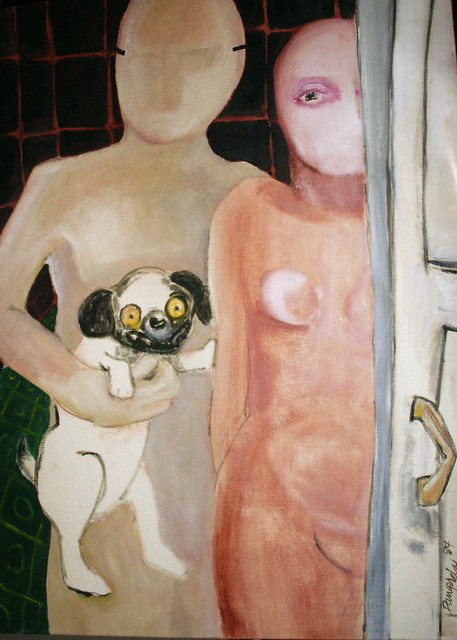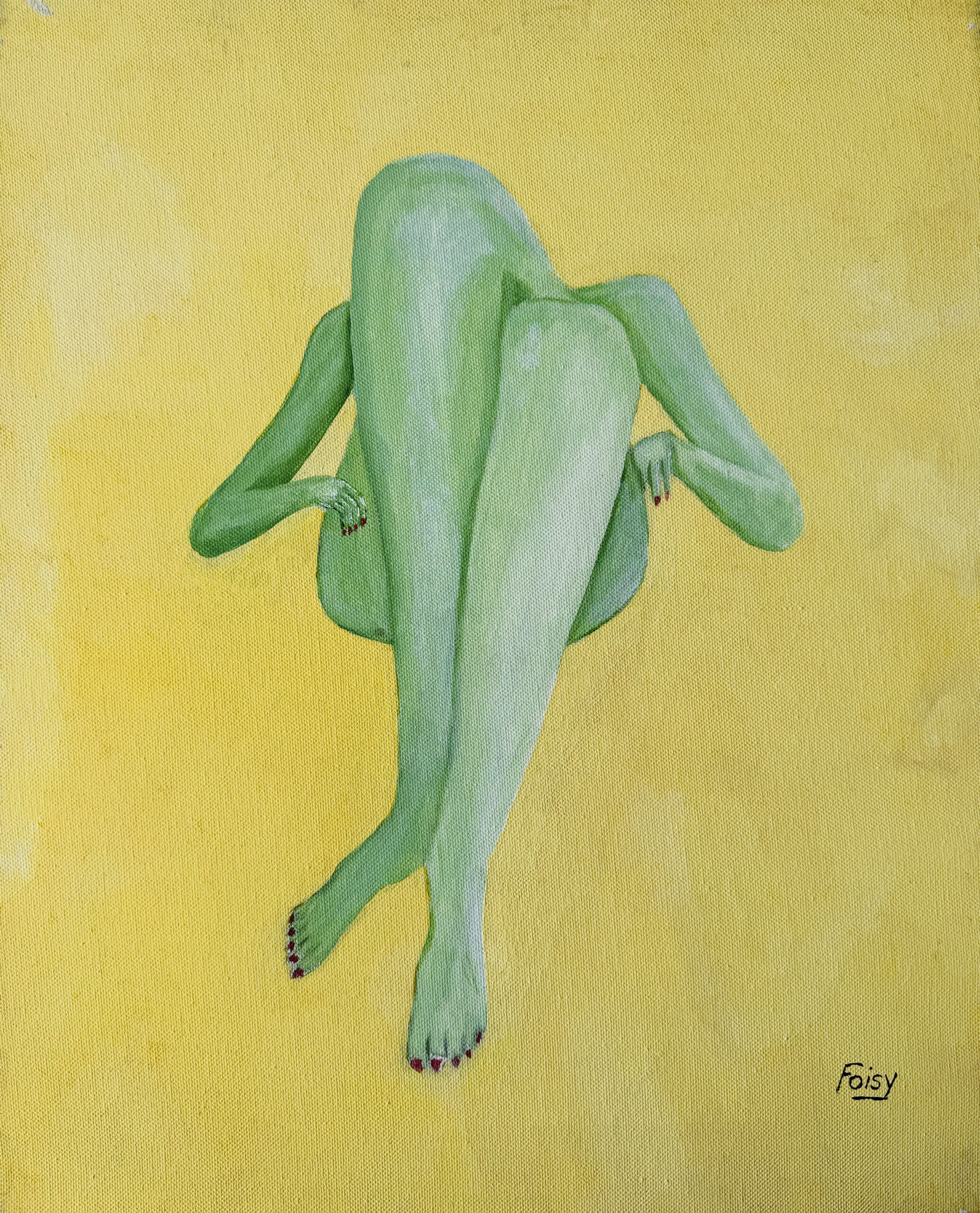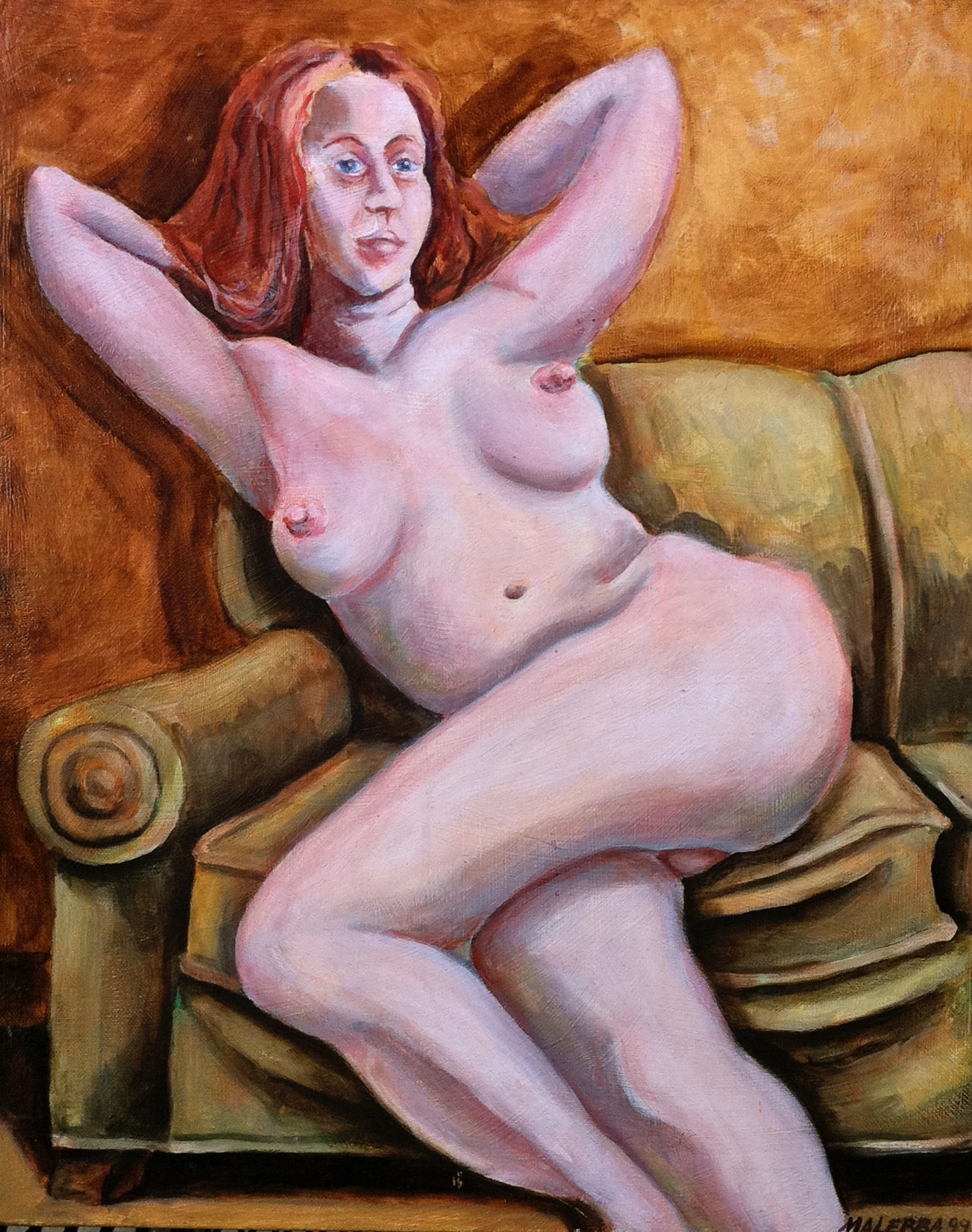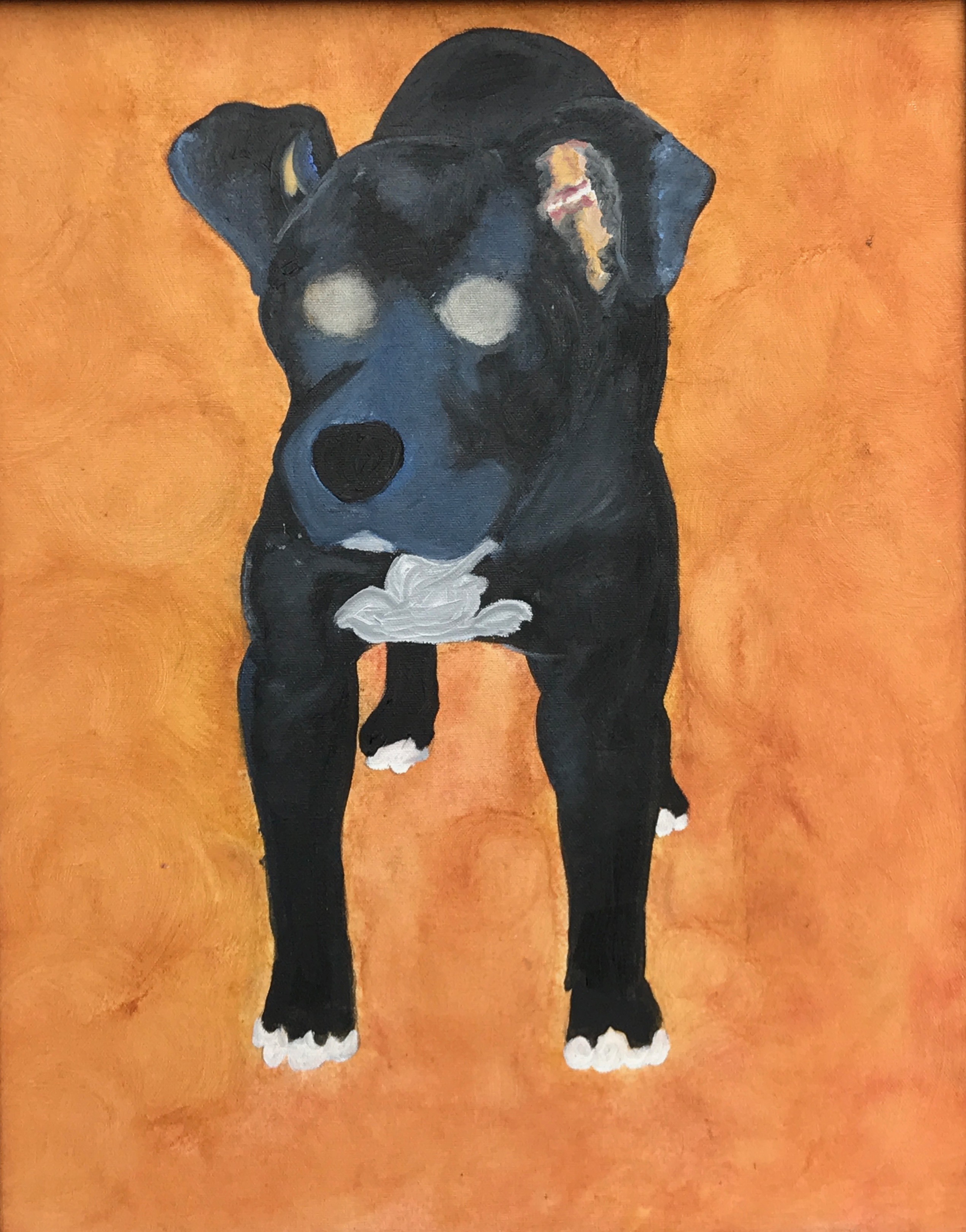
Some works capture our attention in seconds, and we cannot help but stand there, transfixed, looking at them for a stretch of time we stop measuring. Others barely hold our gaze for more than a few seconds. Some move us even when we cannot quite explain why, while others provoke the exact opposite: discomfort, rejection, even laughter. A poorly proportioned face, an impossible landscape, a perspective that seems to collapse, or a combination of colors that should not work can be enough for us to decide, almost instantly, that we are looking at something “bad.”
The problem begins when we look again.
Because if a work makes us stop a second time, argue about it, try to understand what happened, or even develop a certain affection for something that initially seemed awful, then simply calling it “bad” may no longer be enough.
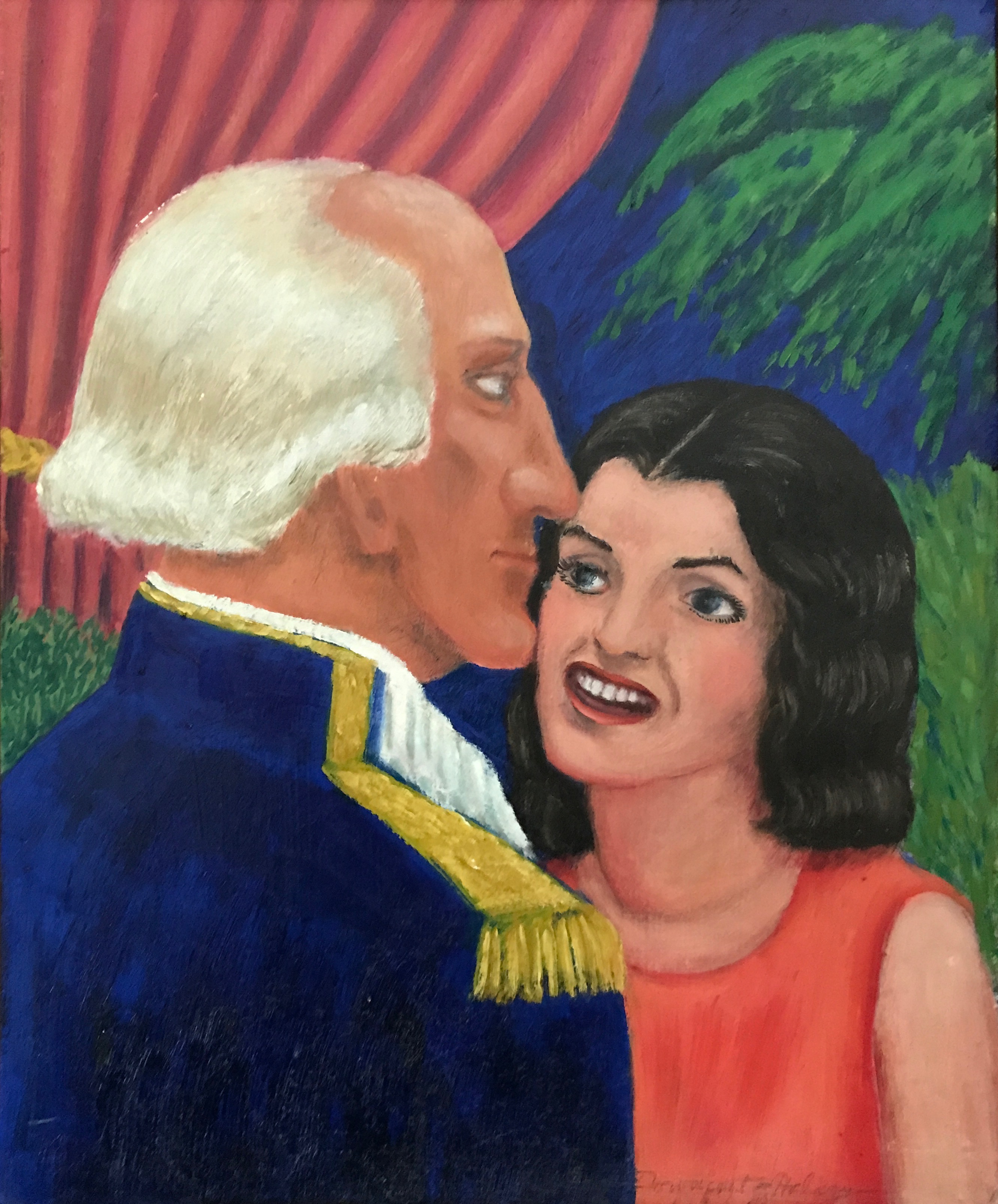
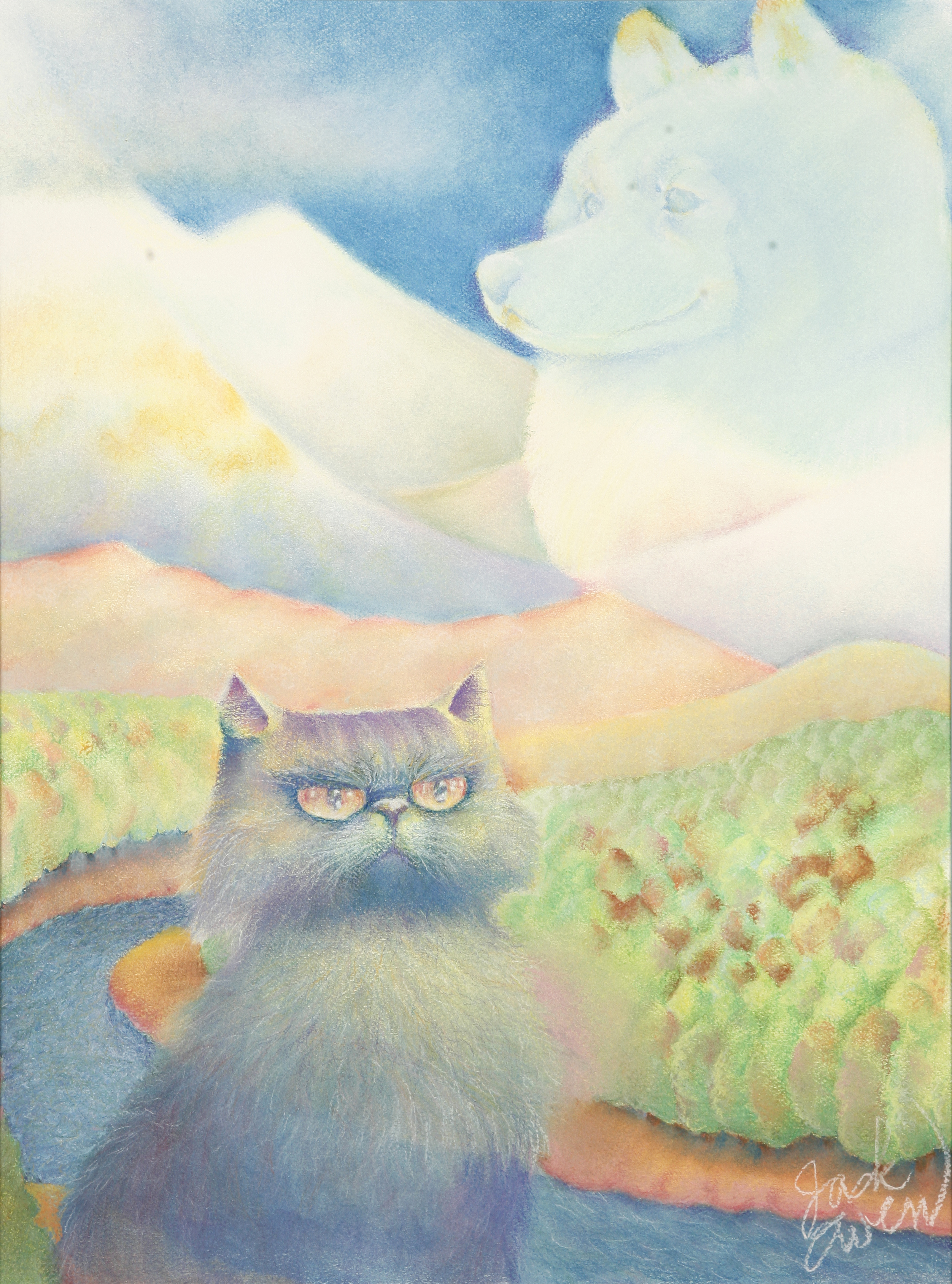
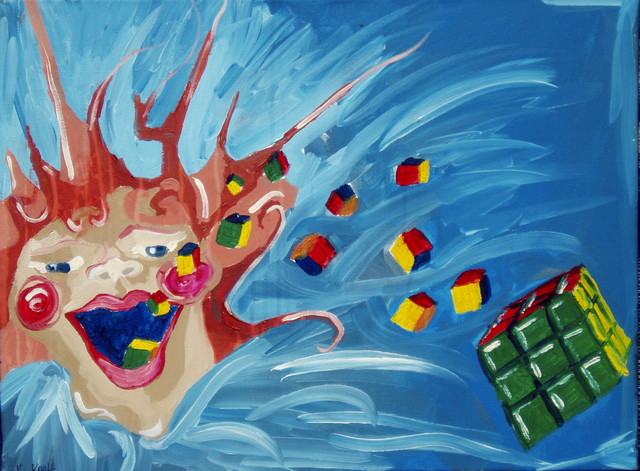
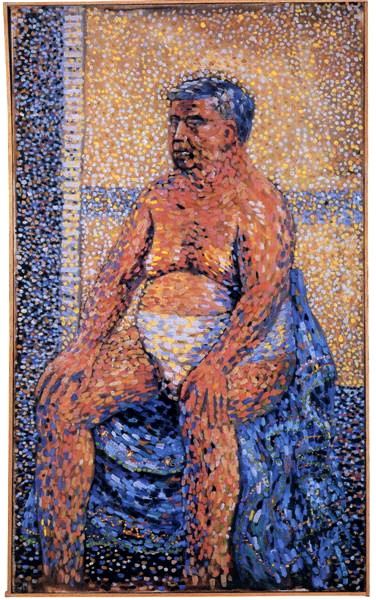
In Boston, there is a museum built around that contradiction. It is called the Museum Of Bad Art, or MOBA, and although the name may sound like a joke, for more than three decades it has been collecting, preserving, and exhibiting works that would probably never find a place in a conventional museum.
And it all began with a painting found in the trash.
Lucy Was Waiting by the Trash
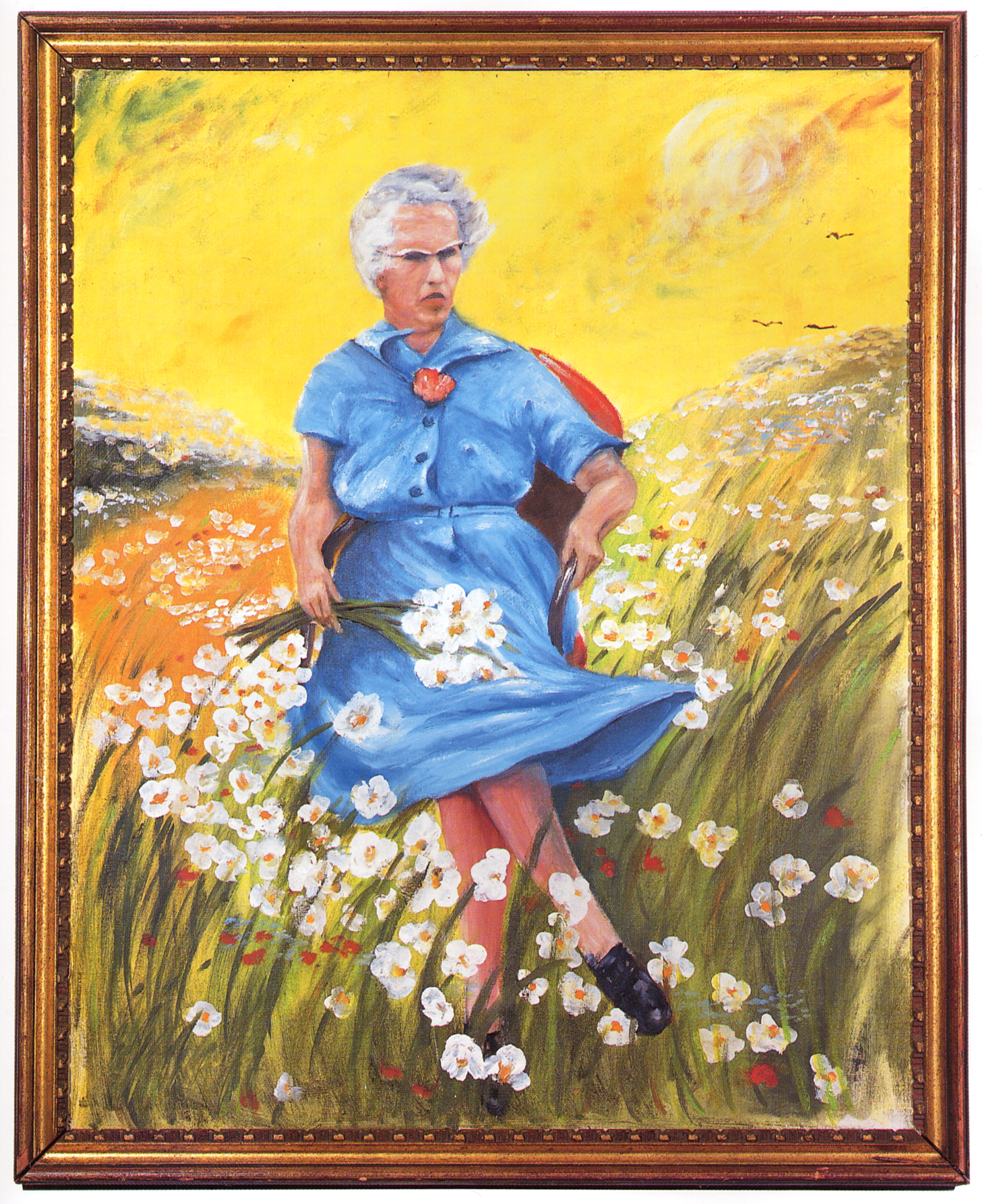
In 1993, antiques dealer Scott Wilson found an abandoned painting in Boston among objects destined to disappear. It showed a woman seated in a chair, surrounded by a field of flowers. Her body seems to move in strange directions, her expression is difficult to decipher, and there is something about the entire composition that does not quite work—yet is equally hard to ignore.
The painting was unsigned and is now known as Lucy in the Field with Flowers.
Wilson initially planned to keep the frame and get rid of the painting, but his friends Jerry Reilly and Marie Jackson convinced him that there was something in it worth saving. That decision gave birth to the Museum Of Bad Art.
The museum’s first exhibition took place in March 1994, and during its early years the collection was shown in the basement of a private home. Over time, it grew to nearly 900 works, although only a fraction are on public display. Its gallery is now located inside Dorchester Brewing Co. in Boston, an unconventional setting for a museum and, at the same time, an oddly fitting one for an institution that has never tried to behave like the others.
What makes MOBA interesting is that it was not created to ridicule people who cannot paint. The way the museum operates makes it quite clear that its purpose is something else.
Being Bad Is Not Enough
Getting into the Museum Of Bad Art is not as easy as it might seem.
The museum rejects works.
In fact, many of the pieces it receives end up in what it calls its Rejection Collection. Reasons for rejection include a work not being sufficiently original, not being interesting enough, being simply kitsch, coming from a paint-by-numbers kit, being made by a child, or resembling too closely something already in the collection.
In other words, being bad is not enough.
A work needs something more. It may be a strange mistake, an impossible composition, a technique applied with a confidence the result does not seem to justify, or an idea that has drifted completely away from what it was probably meant to become. There has to be some kind of personality in the failure.
And that is where one of MOBA’s most interesting contradictions appears: even a museum devoted to bad art still has to exercise taste.
Someone has to decide which work deserves to enter and which does not. Someone has to look at two apparently terrible paintings and conclude that one is worth preserving and the other is not.
The question, then, is no longer simply what makes something bad art. It becomes a question of who gets to decide.
The Problem With Calling Something Ugly
Beauty seems like a very certain word until two people look at the same thing.
Someone can walk into a Baroque church and feel completely overwhelmed by its beauty, while another person sees only excess. One visitor can spend twenty minutes in front of an abstract painting while another cannot understand why it is hanging on a wall at all. A work can be technically flawless and leave us completely cold, while another, full of defects, can remain in our memory for years.
We never arrive at an artwork with an empty gaze.
The way we look is shaped by what we know, by what we have seen before, by our education, our culture, our memories, and our own preferences. Even by the moment in our lives when we happen to stand in front of it.
That is why it is so difficult to draw a definitive line between the beautiful and the horrible.
Art history is full of works, artists, and movements that were rejected, mocked, or dismissed as vulgar before becoming major points of reference. That does not mean that everything we consider bad today will eventually be celebrated, but it does show that taste never remains completely still.
The Museum Of Bad Art takes that instability to a particularly intelligent extreme.
It selects a work because it believes the work has failed in some way, and then proceeds to do exactly what any other museum would do with something it considers valuable: preserve it, catalogue it, light it, write about it, and place it before an audience.
What appeared to be a failure is ultimately given all the tools we use to confer importance.
The Frame Also Changes What We See
Something happens when an object enters a museum.
We look differently.
A painting we might ignore at a flea market begins to demand more attention once it is hanging on a white wall, accompanied by a label and protected by an institution. We move closer, look for details, try to understand the composition, and search for an explanation.
MOBA continually plays with that mechanism.
Works in its collection are accompanied by texts that interpret their supposed complexities with deliberately exaggerated humor. But behind the joke lies a fairly serious question: how much of what we think about a work comes from what we are actually seeing, and how much depends on the context in which we have been taught to see it?
If exactly the same painting were hanging in a prestigious museum and attributed to a famous artist, would we laugh in the same way?
Probably not.
We would look for intention.
We would search for references.
We might even end up defending some of its flaws as deliberate choices.
MOBA forces us to examine that mechanism from the outside and, in a way, turns the museum itself into part of the work.
When Failure Has Personality
There is something else that makes the collection especially appealing: many of these works were created with complete sincerity.
Someone wanted to make them well.
And that completely changes the way we look at them.
There is something deeply human in the distance between what we imagine and what we finally manage to make. An idea can be perfect inside our head and become something entirely different when we try to give it form.
Anyone who has ever created something knows the feeling.
A photograph that seemed extraordinary before pressing the shutter. A sentence that sounded perfect until it appeared on the page. A painting that never came close to the image the artist had in mind.
To create is also to accept the possibility of failure.
Major museums usually preserve what survived all those filters: works that were selected, recognized, sold, studied, and eventually legitimized.
MOBA preserves some of the attempts that veered off course.
And perhaps it is precisely that imperfection that makes some of its works feel so close to us.
Can We Like Bad Art?
Of course.
Because “good” and “I like it” have never meant exactly the same thing.
We can recognize extraordinary technique in a work and still never want to see it again. We can also fall in love with something we know is full of mistakes.
It can make us laugh.
It can remind us of someone.
It can have a combination of colors that, for some reason, we find irresistible.
It can simply be so strange that we cannot forget it.
Taste is not an exam.
And that is probably one of the keys to the Museum Of Bad Art. It does not try to prove that all of its works are secretly magnificent, nor does it try to turn their creators into misunderstood geniuses. It does not need to.
Its existence is enough to remind us that even what we consider bad can still have value.
Not necessarily financial value.
Or historical value.
Or academic value.
Sometimes simply the value of provoking a reaction.
A Museum Far More Serious Than It Looks
The joke works precisely because MOBA takes it very seriously.
It has a permanent collection, acquisition criteria, rejected works, publications, exhibitions, and curatorial practice. Over more than thirty years, its collection has grown to nearly 900 pieces.
There is something rather wonderful about imagining a painting that failed to make it into a conventional museum and then also failed to meet the standards of the Museum Of Bad Art.
Too bad for a museum.
But perhaps not interesting enough for a museum devoted specifically to bad art.
The paradox perfectly captures the problem of taste.
There is always someone looking.
There is always someone deciding.
Looking Without Knowing in Advance What We Are Supposed to Feel
Perhaps the Museum Of Bad Art becomes most interesting when we stop thinking of it as a collection of bad paintings and begin to see it as a kind of experiment in our own way of looking.
It does not tell us what good art is.
Nor could it.
We can study composition, perspective, anatomy, color, technique, historical context, and materials. We can explain why one work was innovative or why another matters within a particular movement. All of that helps us understand what is in front of us.
But understanding a work and feeling something for it are still two different things.
There are perfect paintings that say nothing to us.
And there are completely imperfect images we cannot forget.
Perhaps that is why Lucy in the Field with Flowers remains such a good way to explain the entire museum.
In 1993, someone left it by the trash, believing it no longer had any value. Someone else looked at it and decided it deserved to survive.
More than thirty years later, it is still hanging on a wall, and people still stop in front of it.
Perhaps beauty does not always lie in being well made.
Sometimes it may simply lie in making someone look again.